
EIE celebrates 35 years of success
Di Redazione
Interview with Tommaso Marchiori, current CEO of the EIE Group and son of founder Gianpietro Marchiori, who guided the company through the scientific and technological evolution of our society and economy, today’s New Space Economy, without losing sight of its original goal: the maintenance of railway tracks.
The EIE company is celebrating 35 years of activity. It represents an Italian reality that has been able to build an important qualitative path for itself, all the way to space exploration sector. Let’s start from this reality, which has recently taken an acceleration by becoming again a discriminating factor in the geopolitical landscape: what is the idea of what the future of space can be with the new U.S. leadership and the rise of new space powers such as China, but also the investments of countries emerging such as India and the United Arab Emirates?
Exploration has always represented for humans a quest for knowledge, adventure, and discovery, a way to push our own limits, both physical and mental, to understand the world and ourselves. The evolution toward space exploration not only enhances our understanding of the Universe, ability to innovate and adapt to the challenges of the future, but also revolutionizes our approaches toward technology and science in general. It is therefore essential to activate processes of cooperation and collaboration, which are the real catalyst for its evolutionary capacity at this complex moment in history.
Exploration also fosters the interchange of knowledge and expertise as well as ensures mutual support between parties while generating cross fertilization between industrial systems and between them and institutions.
Since the postwar period, although with totally different dynamics, the U.S. and the Russian Federation continue to be characterized by their actions as “leaders” in the evolution and progress in the space field, depending on the relative bilateral or joint relationships. In the New Millennium, China, India and the UAE have begun to impose themselves on the world stage by highlighting both scientific and commercial national strategies in full New Space Economy style .
Competition, therefore, will become increasingly persistent and geopolitically oriented by geopolitical phenomena of nations such as China and India. It will consequently be necessary to follow the steps “closely” in the short term and figure out how to fit in with a view to a conjunction of purpose, in disciplinary areas that compensate for their non-strategic presence in technological market niches (being able to respond within their market).
IEE is part of the ecosystem of companies capable of offering, internally within the national system and in the rest of the world, specific content that satisfies the collective will in view of a new race in the domain of space activities (IEE-Science-Industry-Services).
How do you assess European policies in the sector? Do they live up to the dynamism that characterizes it?
The ESA was created to satisfy sector policies among member countries and with the understanding that we all belong to a single market. In which to continue to invest in research and development, making expenditures efficient and favoring states meritocratically, without underestimating the aspect of resource allocation, in order to avoid internal fragmentation, understanding when it is possible to favor public investment while respecting international rules.
The U.S., China and India, for their part, have implemented programs that chase with or without foreign collaboration. Therefore, it is up to us to activate new and different relationships in order to obtain possible collaboration agreements. To do so, it is necessary to become increasingly aware of the complexity, including cultural complexity, of the dynamics of collaboration, so that unnecessary competitive barriers can be avoided. Italian ministerial cabinets should maintain continuous attention to this, employing highly experienced personnel. In fact, it is well-established that “… in ESA you can do a lot with a little…” as evidenced by the numbers available for funding in many programs.
Policy must champion itself with less bureaucratic methodologies and processes. As pointed out earlier there is a need for more responsiveness and less dependence on third countries, there is also a need for more respect in relation to common agreements, in the European single market, which is too often subtended euro-based economic and financial dynamics.
For a correct interpretation, one must then understand the role of the single market and the interactions between states within it. Many technologies could be developed within European countries, and this approach would, on the one hand, favor the preservation of know-how and, on the other hand, ensure productions for third parties, so as to then hold sectoral market roles.
In this era of strong interchange, Golden Power has been an instrument for the protection of national interests and economic security. This intervention is only one of the possible ones, capable of balancing international economic openness from a national perspective.
It is therefore necessary to promote the same at the European level, with continuous monitoring, consolidating national and European security jurisprudence, and analysis on financial transactions (statistical and historical). In addition, in case there are other bilateral or n-lateral instruments that, coming out of the common rules, will have to coexist without compromising market stability.
Finally, in territorial contexts, in order not to be dependent on third parties, it will be necessary to empower people and companies to be able to think and develop patents; to promote the existence of startups without overriding the state of maturity of the processes or ideas that arise from them, and thus in a sense to give a wide field to the people in charge of forming their backbone and muscles (Management & Engineering).
It will also serve to consolidate technology hubs that link INDUSTRY-UNIVERSITIES-RESearch Centers first on a national scale and then on a European scale; with strong, shared networks within the single European market without dispersion or dependence on third parties on advanced technologies or those deemed critical.
On the energy front, EU countries will have to continue research and development in nuclear fusion and nuclear fission (Aerospace has been using the latter for decades). will have to be redundant interests in semiconductor technologies!!! Strategic alignments will then be needed for the EU as are already established with the US but extendable in analogy to Australia and Japan.
Useful technologies to improve the “industry” of agriculture or other food supply chains (but understood in the domain of all environmental resources available within the EU) that benefit directly and indirectly from aerospace technologies will have to be supported. Investment in education and advanced training is also crucial; we will need to invest in technical and scientific education to ensure a highly skilled workforce and develop competitiveness. In this sense, European universities have done well, anticipating the times on attracting talent from outside the EU and making the entire European territory an attractive hub to compensate for the “loss” of human resources. In this global, interconnected and complex context, I believe that combining targeted internal EU policies with strong international cooperation can support the protection of economic and strategic resources in a time-varying predictive key.
What about Italy? How do you assess our positioning, also in light of new space law? Will we be able, in your opinion, to intercept the opportunities that this growing market will provide? Do you have any suggestions to make?
The new law on space in Italy, recently approved, represents a significant step for the national space sector. It aims to boost the growth of the space industry by promoting investment in research and development, supporting start – ups and facilitating collaborations between public and private entities. Key points include, first and foremost, measures to ensure that space activities are environmentally sustainable; incentives for innovative projects; international collaboration by promoting partnerships with foreign space agencies and companies; and initiatives to train new professionals in the space sector. This law could strengthen Italy’s positioning in the European and global context, contributing to significant projects such as those related to exploration, telecommunications and Earth observation.
The coming years should therefore be characterized by new initiatives based, for example, on multi-mission and multi-frequency concepts, the launch of constellations, the mini-micro-nano satellites providing innovative services, and the launch of distributed scientific satellite systems. The capacity building and flexibility of the Vega program will also have to be increased: this can ensure the active involvement of the research and industrial worlds, with particular reference to SMEs and start-ups.
Back to IEE GROUP. If you had to sum up your journey over these “first 35 years” in three words, which ones would you use and why?
Creativity, guiding innovation (sector leadership), have represented and represent EIE’s international success and its ability to stay and grow in markets. Current evolutions can only confirm the relevance of these terms, which have been assumed to represent the ways in which IEE addresses its challenges.
In particular, EIE GROUP has based its growth path on the ability to engineer possible solutions. How does space exploration fit into that context?
EIE developed over the years a systemic capability that enabled it to place its engineering at the forefront of complex, multidisciplinary project development processes. With such endowments EIE has consequently entered the world of space and defense. It has done so by ijnserting young specialists in the field into the workforce, who have been able to immediately integrate themselves into the specific dynamics of applied engineering, but also by complementing their endowments with innovative managerial and relational processes.
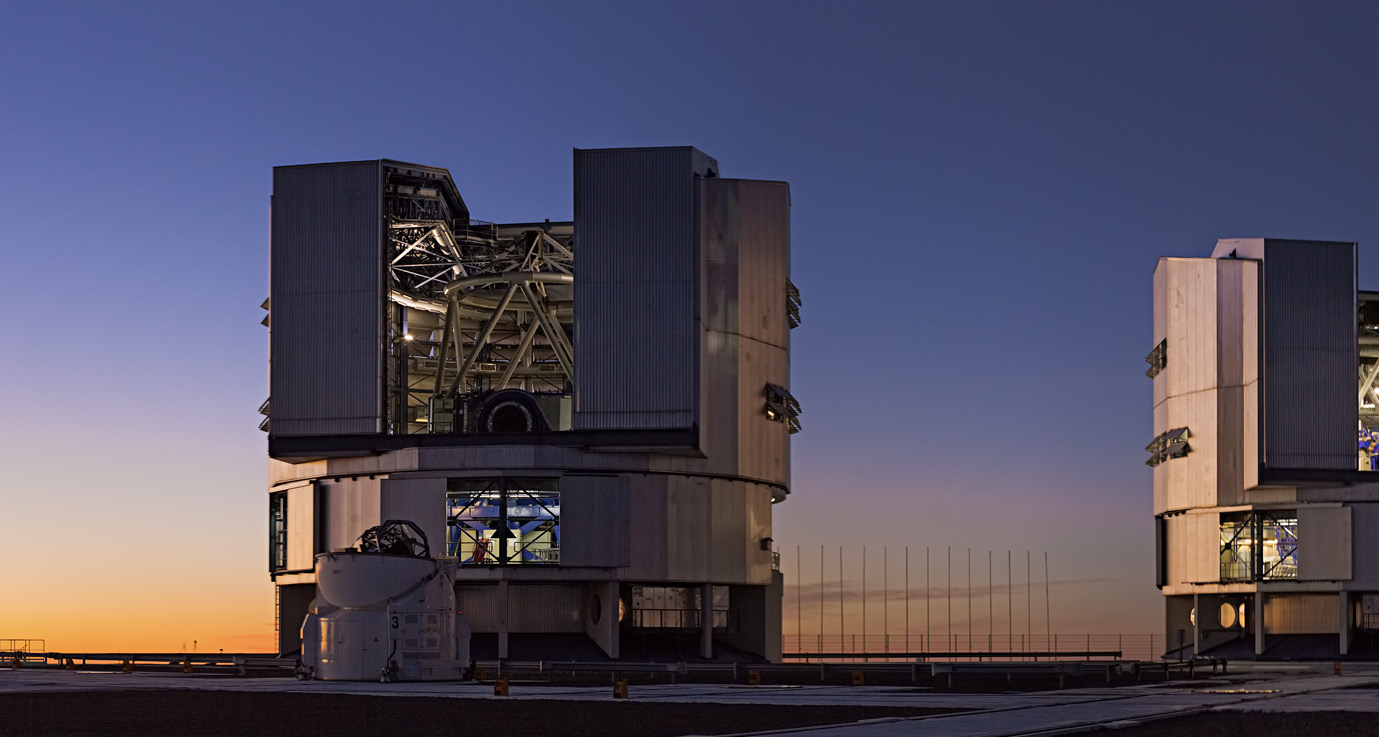
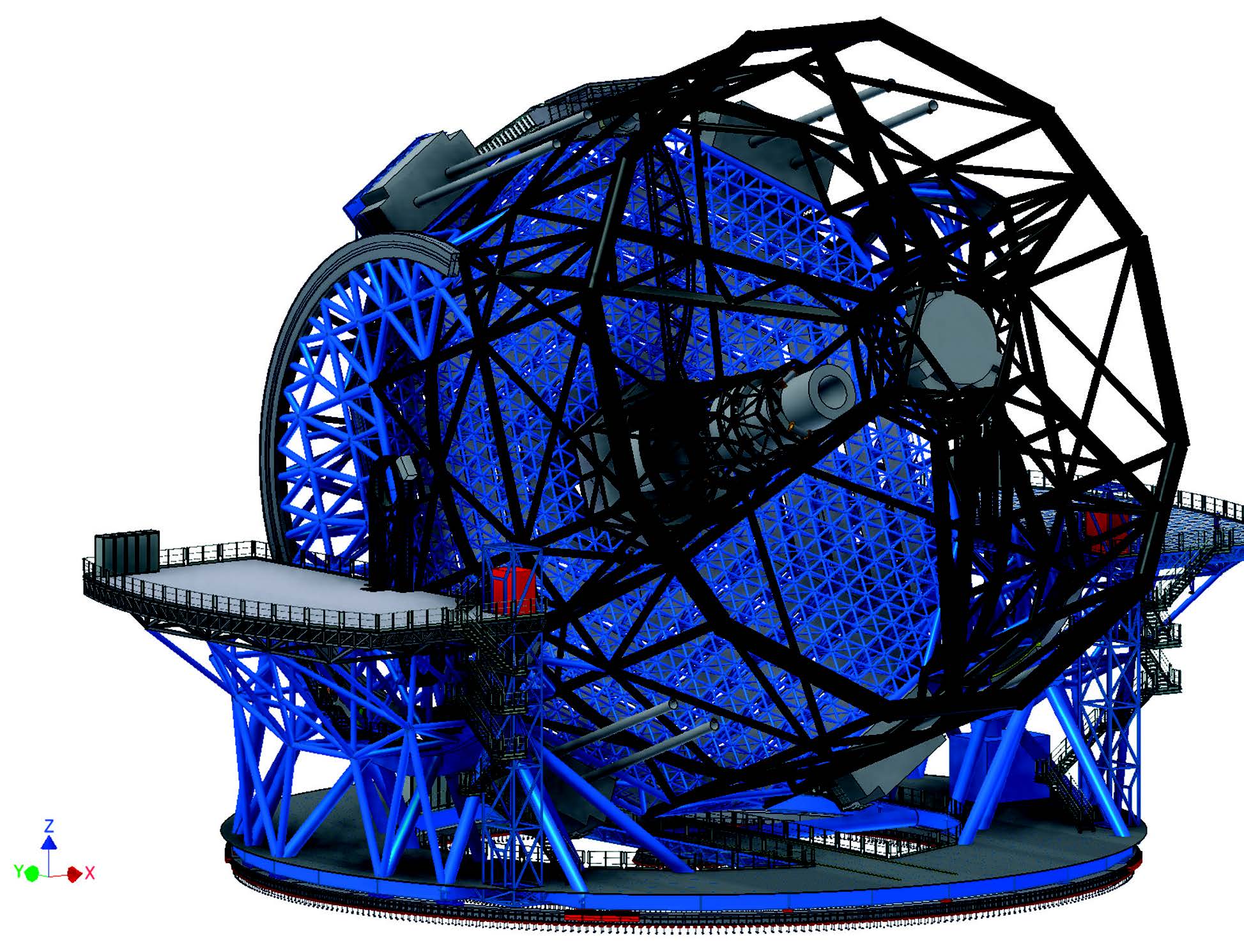
EIE has skillfully activated plans to transpose its technologies to neighboring fields such as ground facilities and aerospace and defense applications. EIE products are: the Flyeye observatories for ESA, for Space Surveillance and Tracking; the VERT-X system with their Raster -Scan for calibrating the X-ray mirror of the future Athena space telescope, also for ESA, which will be installed inside a vacuum chamber consisting of a 7m diameter steel cylinder with a height of only 20m. also are EIE’s products for space are stereo hyperspectral cameras to be installed on drones, cube-sats or satellites for “four-dimensional” observation of the Earth’s surface or planetary observation. Recently, EIE has started an interesting path to build launch pad facilities for future spaceports and for human presence on the Moon and Mars.
For the years ahead, is your approach more for space or from space? Or do you intend to operate on both fronts?
EIE has never planned narrowly configured business directions, allowing itself to be led by marketing strategies oriented by market opportunities and trends, wisely adapting its technologies, infrastructure and, above all, its ability to adapt the engineering and managerial offerings of its workforce. Therefore, EIE is characterized as a company ready to offer systemic processes in the development of complex projects, also using an articulated, as much as mature, supply chain and industrial and scientific aggregations aimed at the objectives to be pursued.
In the past, space investment has been mostly public. In recent years, private individuals have gained prominent positions, and the trend seems to be accelerating; suffice it to say that the new administrator of Nasa is a private entrepreneur. Do you still think the role of the public in space investment is decisive, or do you think it is gradually disappearing?
The role of the public sector in investment remains critical, even as private participation increases. Governments provide initial funding, regulations and critical infrastructure, in addition to ensuring ka security and international cooperation. The new deal of the space economy has transformed industrial interest, generating a growing presence of private companies. Public-private collaborations, as in the case of NASA and SpaceX, show that both sectors can benefit from this synergy. The public sector is likely to continue to play a crucial role, but it may evolve from a direct funding model to one of strategic partnerships. In this context, the total disappearance of the public sector seems unlikely, since space missions require resources and expertise that the private sector alone may not be able to provide.
Europe, through the European Space Agency (ESA) is promoting a public-private cooperation strategy to support the space industry. It has launched programs such as Commercial Space Activities which incentive start-ups and private companies by offering funding and technical support. In Italy, the Italian Space Agency (ASI) has partnered with private companies such as Leonardo and Thales Alenia Space to develop satellite and space exploration projects. The Italian government has also invested in research and development initiatives, aiming to make the space sector an engine of economic growth. The new space law passed by the Italian government, known as the “space industry law,” aims to support the development of the national space industry. It provides tax incentives, funding for research and innovation, and a clearer regulatory framework for space activities. One of the main goals is to promote collaboration between the public and private sectors, facilitating private investment and start-ups in the space field. The law also aims to ensure the security of Italian space operations and to position Italy as a key player in the European and global context. In sum, this law is a significant step to strengthen the Italian space industry, stimulating competitiveness and innovation.
In summary, both Europe and Italy are taking a mixed approach, integrating public investment with private sector dynamism to strengthen their position in the global space landscape.
The evolution of the space sector is, in any case, the result of collaboration. How much and how will this aspect matter for the future of EIE GROUP?
As previously expressed, space domains are characterized by long-term, multidisciplinary processes, where mainly large national, European, and international players define development and implementation plans with governments, organizations, and space agencies. EIE operates in such contexts both with direct relationships with space agencies and with industrial partners of international caliber. Similarly, EIE has been a promoter over the years of the establishment of regional districts (e.g., SKYD Veneto District) or the current Veneto network for aerospace (RIR-AIR) with which it operates in national and international contexts, in terms of promotion and implementation.
EIE also belongs to the national association AIPAS (Association of Enterprises for Space Activities) and is an active participant in institutional relations that contribute to the definition of industrial policies in the space field. In the international arena, EIE is also a Global Spaceport Alliance Associate Member for all issues related to the implementation of spaceports in terms of infrastructure and services.
IEE has thus provided a fertile environment in which to attract opportunities, share planning, and establish paths of collaboration.
In general, if you look ahead to you and the challenges that EIE GROUP will face, what feelings do you have, and why?
For EIE, space represents a vital part of its everyday life, not only because it characterizes the relevant business unit but also and especially because it takes the form of a new and different modus operandi. It follows that for IEE it is not a matter of characterizing feelings, but of configuring global behaviors, as represented by our new motto that will characterize our next 35 years: “Sons of a New Universe.”
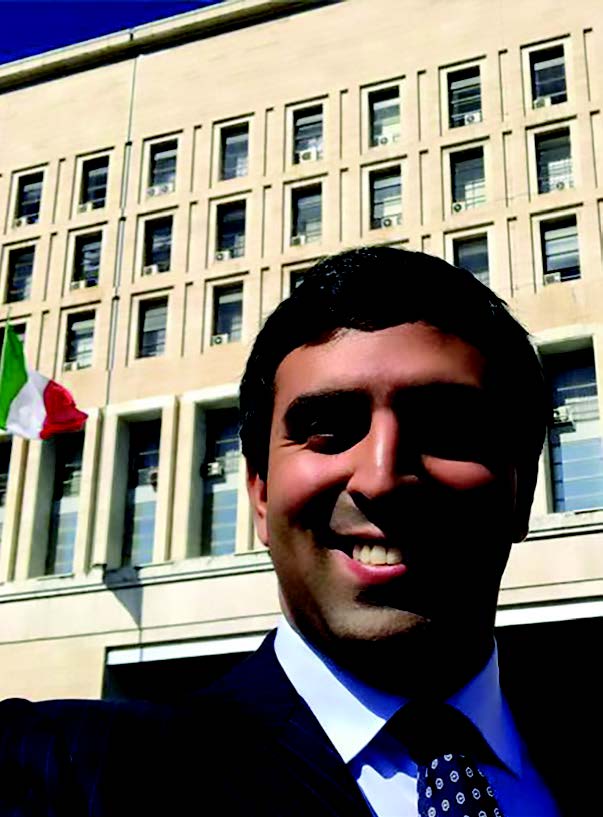
Tommaso Marchiori
Fèlsina apre le porte alla grande musica
Di Redazione La musica incontra il vino nel cuore del Chianti Classico. Mercoledì 6 agosto Fèlsina farà da cornice a "Chigiana Chianti Classico Experience", il progetto nato dalla...
Monteverro celebra 20 anni di Capalbio Libri
Di Redazione 20 anni di libri, idee e incontri. Per celebrare questo importante traguardo, Monteverro rinnova il proprio sostegno a Capalbio Libri, il festival dedicato al piacere della...
Mittelfest 2026 alla Cantina Zorzettig
Di Redazione Lunedì 20 luglio alle ore 19.45 la cantina di Annalisa Zorzettig ospiterà Una Traviata da cortile, il progetto teatrale di Alessandro Baricco inserito nel cartellone di...
Degusta Vigna 2026
Di Redazione Grosjean Vins apre le porte della propria tenuta per vivere la viticoltura valdostana tra vino, musica e territorio. La famiglia Grosjean rinnova anche quest’anno...
Cous Cous Fest, la 29° edizione dal 18 al 27 settembre a San Vito Lo Capo
Di Redazione Cous Cous Fest A San Vito Lo Capo il cous cous diventa festa, in contro ed emozione condivisa: è il Cous Cous Fest, dieci giorni di sapori, musica e spettacolo che...
VinoVip Cortina 2026
Di Redazione Mancano ormai pochi giorni al ritorno di VinoVip Cortina, il summit biennale ideato e organizzato da Civiltà del bere, che, domenica 12 e lunedì 13 luglio riporterà sulle...
Morellino del Cuore 2026
Di Redazione Quarta edizione di Morellino del Cuore: svelati i vini scelti dalla commissione di assaggio composta da sommelier italiani. Progetto nato dalla collaborazione tra il...
Raccolti 268.845 euro a Buonissimi 2026
Di Redazione Successo in Campania per l’evento Buonissimi 2026 dell’Associazione OPEN OdV, organizzato da Paola Pignataro e Silvana Tortorella in favore della ricerca scientifica. Il...
Vini per l’Estate edizione 2026
Di Redazione Un tramonto sul mare, un calice in mano e una selezione di etichette provenienti da tutta Italia. Sono questi gli ingredienti di "Vini per l'Estate 2026", l'evento...
Cambio ai vertici di Famiglie Storiche e Antica Bottega del Vino
Di Redazione Luca Speri raccoglie il testimone da Tommasi alla presidenza dell’Associazione Famiglie Storiche che unisce tredici storiche realtà della Valpolicella. Giacomo Boscaini di...